How to Calculate Aluminium Sulphate Dosage for Water Treatment: A Practical Guide for Water Treatment Buyers
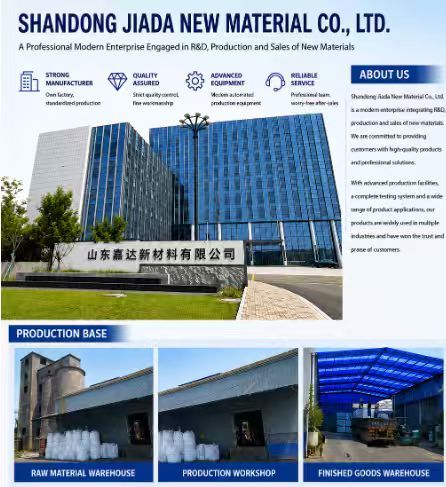
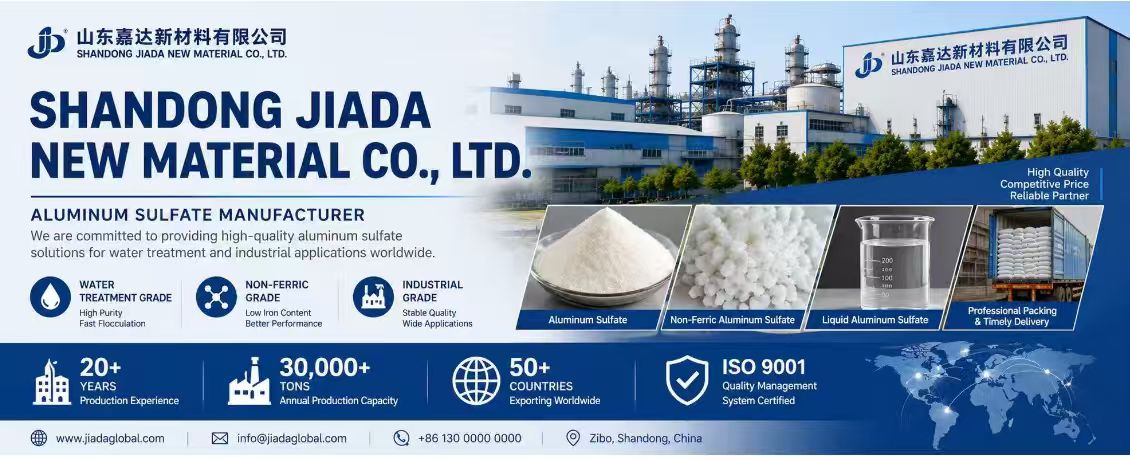
Understanding Aluminium Sulphate Dosage Aluminium sulphate dosage is one of the most important factors affecting coagulation performance in water treatment. Too little coagulant may result in insufficient particle destabilization and poor floc formation. Too much may increase chemical consumption, sludge production, and operating costs. However, there is no universal aluminium sulphate dosage that works for every water treatment system. The appropriate dosage depends on: Raw water quality Turbidity Organic matter pH Alkalinity Temperature Aluminium sulphate specification Treatment objectives Other chemicals used in the process For this reason, professional water treatment plants normally determine the dosage through laboratory testing and process evaluation. Shandong Jiada New Material Co., Ltd. is a professional aluminium sulphate manufacturer in China, supplying aluminium sulphate for municipal water treatment, industrial wastewater treatment, and other applications.
What Is Aluminium Sulphate Dosage? Aluminium sulphate dosage refers to the quantity of aluminium sulphate added to a specific volume of water. It is commonly expressed as: mg/L g/m³ kg/1,000 m³ Because: 1 mg/L = 1 g/m³ these units can be converted easily. For example: If a treatment plant uses 50 mg/L aluminium sulphate: 50 mg/L = 50 g/m³ For 1,000 m³ of water: 50 × 1,000 = 50,000 g = 50 kg Therefore, a theoretical calculation would require approximately 50 kg of product for 1,000 m³ at a dosage of 50 mg/L. Actual operating dosage should still be determined through testing.
Basic Aluminium Sulphate Dosage Formula A simple calculation is: Chemical requirement (kg) = Water volume (m³) × Dosage (mg/L) ÷ 1,000 For example: Water flow: 2,000 m³/day Selected dosage: 40 mg/L Calculation: 2,000 × 40 ÷ 1,000 = 80 kg/day This is a theoretical product consumption calculation based on the selected dosage. The actual amount required depends on the product specification and treatment conditions.
Why There Is No Universal Dosage Two water treatment plants can treat completely different water even when they use the same aluminium sulphate product. For example, raw water may vary in: Turbidity Suspended solids Organic matter pH Alkalinity Temperature A dosage that works under one condition may not produce the same result under another. Therefore, buyers should avoid selecting a dosage based only on another plant’s experience.
Jar Testing: The Practical Way to Determine Dosage A jar test is commonly used to evaluate coagulation performance. A typical laboratory evaluation may involve: Step 1: Prepare the Water Sample Collect a representative sample of the actual water to be treated. Step 2: Prepare Aluminium Sulphate Solutions Prepare the appropriate concentration of aluminium sulphate solution. Step 3: Test Different Dosages For example: 10 mg/L 20 mg/L 30 mg/L 40 mg/L 50 mg/L The exact testing range depends on the water characteristics. Step 4: Rapid Mixing Mix the coagulant with the water quickly to promote chemical dispersion. Step 5: Slow Mixing Allow flocs to develop under controlled mixing conditions. Step 6: Settling Allow the flocs to settle. Step 7: Evaluate the Water Measure parameters such as: Turbidity Color pH Residual aluminium when relevant Floc characteristics The objective is to identify a treatment condition that provides the required water quality without unnecessary chemical consumption.
Factors Affecting Aluminium Sulphate Dosage 1. Turbidity Higher suspended particle concentrations may require different coagulation conditions. However, dosage does not necessarily increase in direct proportion to turbidity.
pH Aluminium chemistry is strongly influenced by pH. The effective operating range depends on the water characteristics and treatment process.
Alkalinity Alkalinity can influence the reaction of aluminium sulphate in water. If alkalinity is insufficient, the treatment process may require additional adjustment.
Temperature Water temperature can affect mixing, reaction, and floc formation.
Organic Matter Natural organic matter and other dissolved substances can affect coagulant demand.
Aluminium Sulphate Specification Different aluminium sulphate products may have different: Al₂O₃ content Moisture Insoluble matter Physical forms Therefore, buyers should consider product concentration when calculating chemical consumption.
How Product Specification Affects Cost Suppose two products have different effective aluminium content. The price per ton alone cannot determine which product is more economical. Buyers should consider: Price per ton + actual dosage + active component concentration + treatment performance For large water treatment projects, this can have a significant impact on annual chemical expenditure.
Liquid vs Solid Aluminium Sulphate Aluminium sulphate may be supplied in different physical forms. Solid Aluminium Sulphate Advantages can include: Easier long-distance transportation Flexible storage Convenient for export Suitable for dry chemical dosing systems Liquid Aluminium Sulphate May be suitable for plants with: Liquid chemical storage Pump dosing systems Existing liquid chemical infrastructure The appropriate form depends on plant design and logistics.
How Much Aluminium Sulphate Does a Water Plant Need? The answer depends on: Daily water volume × actual dosage For example: A plant treats: 10,000 m³/day and the tested dosage is: 30 mg/L Theoretical daily consumption: 10,000 × 30 ÷ 1,000 = 300 kg/day Monthly requirement at 30 days: 300 × 30 = 9,000 kg = 9 tonnes/month Again, this is a calculation example rather than a recommended dosage.
How Buyers Can Estimate Annual Purchasing Requirements A water treatment buyer can estimate annual demand using: Annual consumption = Daily water volume × Dosage × Operating days ÷ 1,000 For example: 10,000 m³/day 30 mg/L 330 operating days 10,000 × 30 × 330 ÷ 1,000 = 99,000 kg = 99 tonnes/year This calculation can help purchasing departments estimate: Annual chemical demand Storage capacity Contract volume Shipping frequency Procurement budget
What Buyers Should Ask an Aluminium Sulphate Manufacturer Before purchasing, international buyers can ask: Product Information What is the Al₂O₃ content? What is the moisture level? What is the insoluble matter? Is the product granular or powder? Quality Control Can you provide a recent COA? Can you provide samples? Is batch testing available? Supply What is the monthly production capacity? What packaging is available? What is the normal lead time? Export Can you provide SDS and TDS? Can you support export documentation? Which shipping terms are available?
Shandong Jiada Aluminium Sulphate Supply Shandong Jiada New Material Co., Ltd. manufactures aluminium sulphate for international customers. The company focuses on: ✅ Stable product specifications ✅ Large-volume supply ✅ Flexible packaging ✅ Export documentation ✅ International logistics support Products can be supplied for: Municipal water treatment Industrial wastewater treatment Water purification Paper manufacturing Chemical distribution
Conclusion Calculating aluminium sulphate consumption is relatively simple once the actual treatment dosage has been established. The basic formula is: Chemical requirement (kg) = Water volume (m³) × Dosage (mg/L) ÷ 1,000 However, determining the correct dosage requires more than mathematical calculation. Water quality, pH, alkalinity, temperature, organic matter, product specification, and treatment objectives all influence the final dosage. For this reason, jar testing and actual process evaluation should be used before establishing a large-scale chemical dosing program. For international buyers looking for a reliable aluminium sulphate manufacturer in China, Shandong Jiada New Material Co., Ltd. provides stable products and professional export supply support.